
Foreclosure Defense Versus Bankruptcy
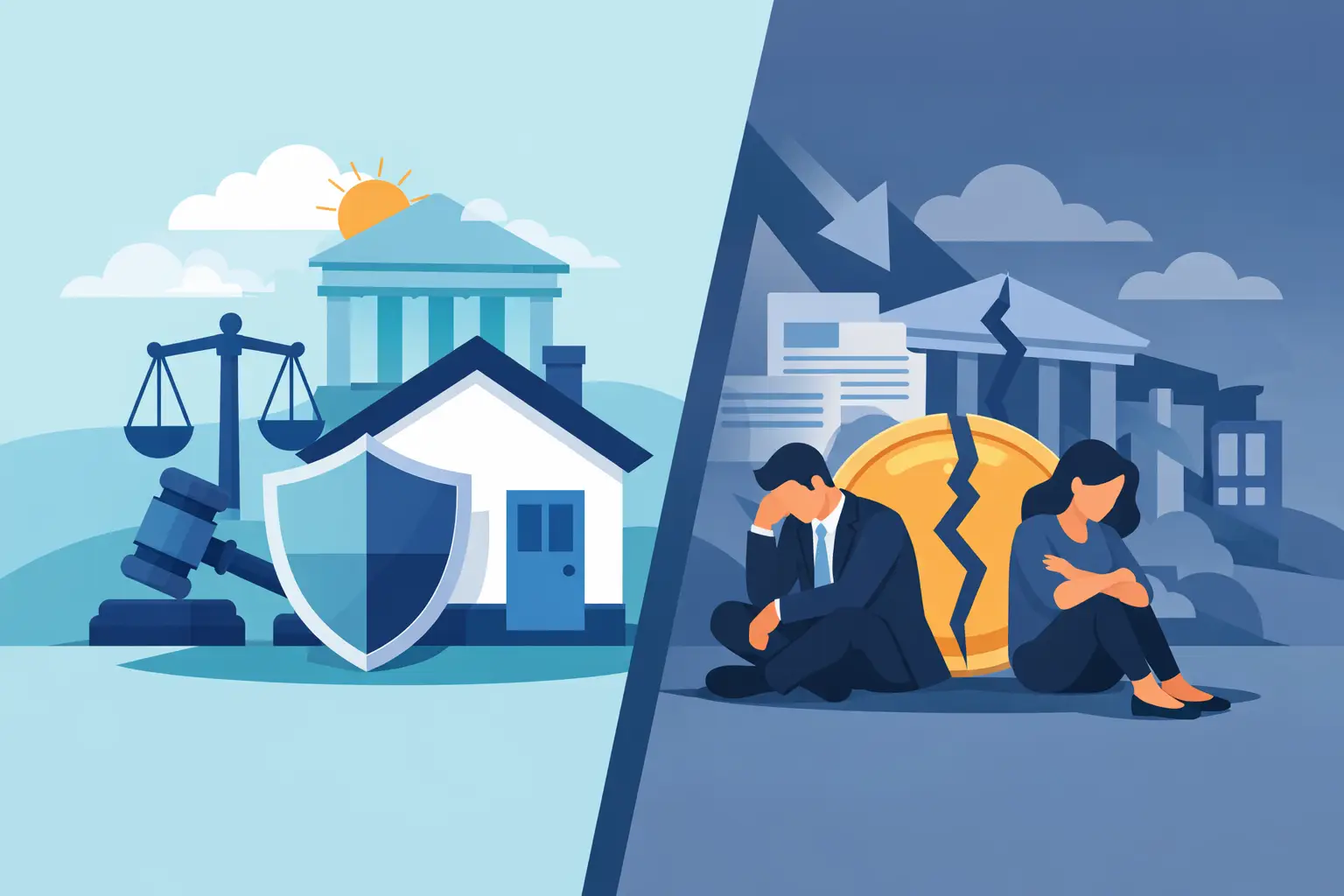
When the foreclosure notice shows up, most people are not asking abstract legal questions. They want to know one thing – what will actually stop the sale and give them a real chance to keep their home? That is why foreclosure defense versus bankruptcy matters. Both can delay or stop foreclosure in the right situation, but they do very different jobs, and choosing the wrong one can cost you time you do not have.
Foreclosure defense versus bankruptcy: what is the real difference?
Foreclosure defense usually means fighting the lender inside the foreclosure process itself. Bankruptcy means using federal court protection to stop collection activity and deal with the debt as part of a larger financial solution. Those are not small differences.
A foreclosure defense case often focuses on whether the lender followed the law, credited payments properly, gave the required notices, or has the legal right to foreclose. Sometimes there are valid defenses. Sometimes there are loan servicing errors. Sometimes a homeowner needs time to pursue a loan modification or another workout.
Bankruptcy is broader. The moment a bankruptcy case is filed, the automatic stay usually stops foreclosure, collection calls, lawsuits, garnishments, and other creditor action. In Chapter 13, you may be able to catch up on missed mortgage payments over time while keeping your home. In Chapter 7, you may be able to delay the sale and eliminate unsecured debts so you can decide your next move with less pressure.
If your problem is only the mortgage and you have a strong legal defense, foreclosure defense may make sense. If the mortgage is part of a bigger debt crisis, bankruptcy is often the more powerful tool.
When foreclosure defense makes sense
There are situations where foreclosure defense is the right place to start. If your lender made serious errors, if the foreclosure paperwork is defective, or if you are already in active loss mitigation and need to force proper review, a defense strategy may buy time or create leverage.
That said, many homeowners hear the phrase foreclosure defense and assume it means they can stay in the house indefinitely without fixing the underlying default. That is usually not how it works. A legal challenge may slow the process, but if you are several months behind and do not have a realistic way to cure the arrears, delay alone may not save the home.
Foreclosure defense can also be narrow. It deals with the foreclosure case, not necessarily your credit card debt, medical bills, repossession risk, tax pressure, or wage garnishment. If those other debts are what caused you to fall behind on the mortgage, then defending the foreclosure without addressing the rest of the financial picture may only postpone the crisis.
When bankruptcy is the stronger option
For many Memphis homeowners, bankruptcy is not just about stopping a foreclosure sale. It is about creating a workable plan. That is where Chapter 13 stands out.
Chapter 13 can stop the foreclosure immediately and allow you to repay past-due mortgage payments through a court-approved plan, usually over three to five years. If you can afford your regular mortgage payment going forward but need time to cure the default, Chapter 13 is often one of the strongest legal tools available.
Chapter 7 works differently. It can stop the foreclosure temporarily through the automatic stay, but it does not create a repayment plan for mortgage arrears. What it can do is wipe out many unsecured debts, such as credit cards, medical bills, and personal loans. For some people, that debt relief frees up enough income to work something out with the mortgage lender. For others, it gives them time to surrender the property in a more controlled way and move forward without crushing unsecured debt.
This is why bankruptcy is so often the better answer when foreclosure is only one part of a larger debt emergency. It addresses the pressure coming from all directions, not just from the mortgage company.
The biggest mistake homeowners make
The biggest mistake is waiting too long because they hope something informal will happen. They assume the lender will call back. They think one more partial payment will fix it. They believe they need all the money upfront before they talk to a lawyer.
By the time many people start comparing foreclosure defense versus bankruptcy, the sale date is close, the arrears are large, and options are narrower than they were a month earlier. Time matters in foreclosure cases. So does accuracy. A rushed filing or last-minute strategy can still work, but early action gives you more room to protect the home and build a plan that lasts.
Another mistake is focusing only on the monthly mortgage payment and ignoring the rest of the debt. If credit cards, payday loans, title loans, medical bills, or garnishments are draining your budget, then even a successful foreclosure defense may not solve the real problem. You need to know whether the home can be saved sustainably, not just temporarily.
How to decide between foreclosure defense and bankruptcy
The right answer depends on what is causing the default, what your income looks like now, and whether keeping the home is realistic.
If you have a temporary setback, steady income, and enough budget to resume regular mortgage payments, Chapter 13 may be the clearest path because it stops the sale and gives you time to catch up. If the lender committed serious errors and you need to challenge the foreclosure process itself, defense work may be appropriate. If you cannot afford the house long term, Chapter 7 may still help by stopping creditor pressure and eliminating other debts while you plan your transition.
It also depends on your goals. Some homeowners want to save the home at all costs. Others need time to move without chaos. Others are not sure whether the house is worth saving because the mortgage is too high, the repairs are too expensive, or the household income has changed permanently. A good legal evaluation should be honest about all of that.
No responsible lawyer should tell every homeowner the same thing. The facts matter. Your payment history matters. Your total debt matters. Your income and expenses matter. Whether the mortgage problem can be fixed matters.
Why bankruptcy often gives more complete relief
Foreclosure is rarely an isolated event. It is usually the visible result of a broader financial collapse. A job loss, illness, divorce, reduced hours, inflation, or years of minimum payments on unsecured debt can all lead to missed mortgage payments.
That is why bankruptcy often provides more complete relief than foreclosure defense alone. It can stop collection harassment, stop garnishments, stop lawsuits, and in many cases discharge the debts that made the mortgage unaffordable in the first place. Instead of fighting one fire, you are controlling the entire financial emergency.
For families in Shelby County who need immediate action, that matters. Relief has to be practical. It has to work in real life, not just on paper. A legal strategy is only useful if it gives you a path you can actually afford to follow.
At Arthur Ray Law Offices, that practical approach is exactly what people are looking for. They do not need legal jargon. They need to know whether their sale can be stopped, whether the house can be saved, and what it will take to get there.
What homeowners should do before the sale date
If you are behind on your mortgage, do not wait for certainty before you ask for help. Get the timeline confirmed. Gather your mortgage statements, foreclosure notices, income information, and a basic list of your other debts. Then get a legal review focused on solutions, not lectures.
You do not need to know the answer before you talk to a lawyer. That is the point of the consultation. A good attorney should be able to tell you whether foreclosure defense is likely to be a short-term delay, whether Chapter 13 could help you catch up, or whether Chapter 7 would give you a cleaner exit and stronger overall debt relief.
The right move is not always the one that sounds toughest. It is the one that solves the most problems with the least risk. Sometimes that is a targeted foreclosure defense. Often, especially when debt pressure is coming from every direction, bankruptcy is the tool that gives you the strongest protection and the clearest path forward.
If your home is on the line, do not measure your options by fear or rumors. Measure them by what they can actually do for you, starting now.
Written and legally reviewed by:


We are a debt relief agency. Our Bankruptcy Lawyers in Memphis, TN help people file for bankruptcy under the bankruptcy code.
*For those who qualify under federal law.