
How Much Debt to File Bankruptcy?
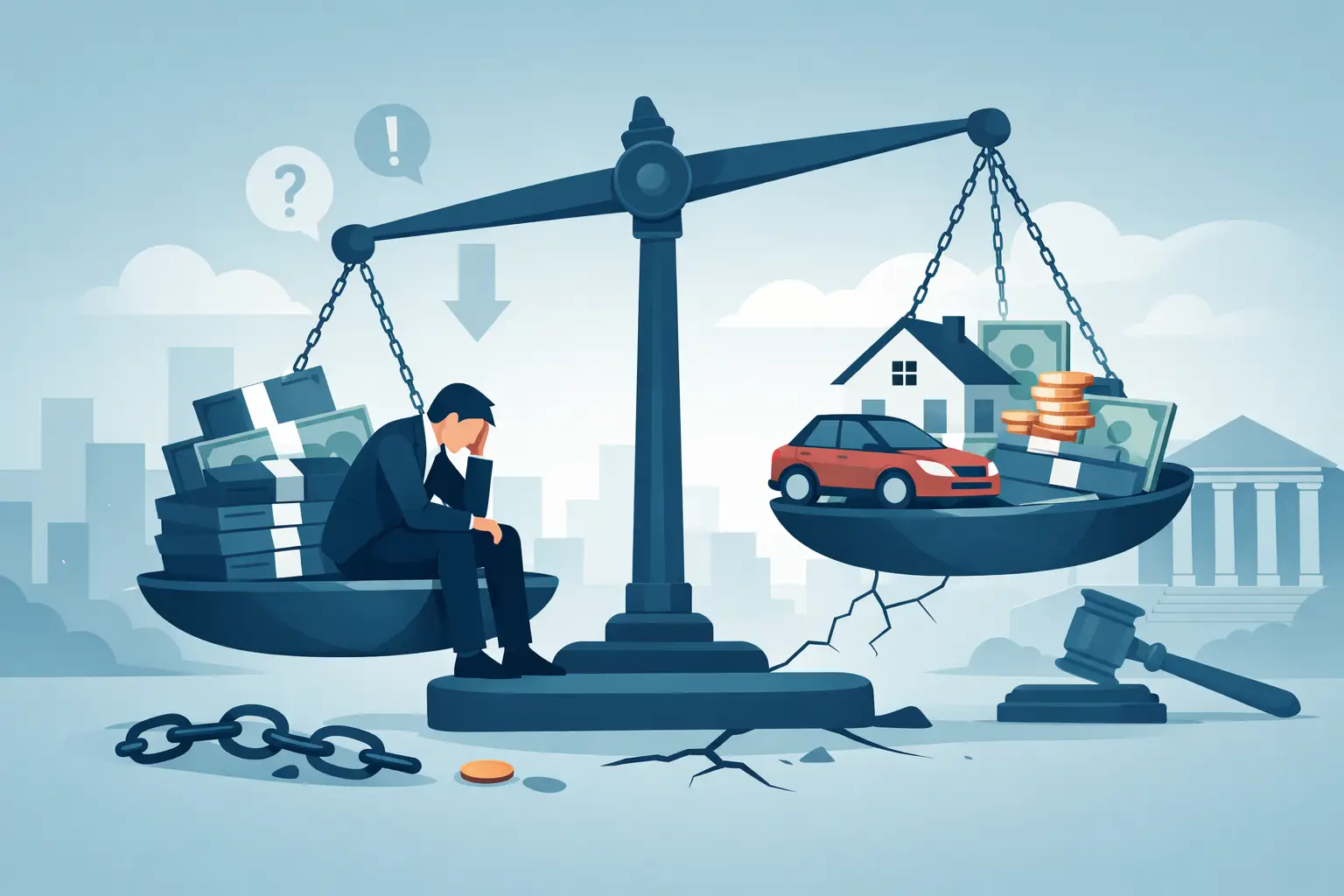
If your paycheck is gone before the month is over, your phone will not stop ringing, and you are choosing which bill can wait, you are probably asking the right question: how much debt to file bankruptcy is enough? Most people expect there to be a magic number. There is not. Bankruptcy is not based on hitting a certain dollar amount. It is based on whether your debt has become unmanageable and whether bankruptcy would give you real relief.
That matters because two people can have the same amount of debt and be in completely different situations. One person may owe $12,000 and be sinking because of wage garnishments, payday loans, and medical bills. Another may owe $40,000 and still be current on everything. The number alone does not decide the case. Your income, your assets, the type of debt, and how badly collections are affecting your life all matter.
How much debt to file bankruptcy depends on your situation
There is no minimum debt required to file Chapter 7 or Chapter 13. The law does not say you must owe $10,000, $20,000, or any other specific amount before you can file. What matters is whether the debt is more than you can realistically handle.
A better question is this: can you pay your debts within a reasonable time without falling behind on rent, mortgage, car payments, food, utilities, or other basics? If the answer is no, bankruptcy may be worth serious consideration.
For many people in Memphis, the pressure is not just the balance itself. It is what comes with it. Lawsuits, garnishments, foreclosure notices, repossession threats, and collection calls turn a difficult debt problem into an emergency. Bankruptcy is often less about a total amount and more about stopping the damage now.
Signs your debt may be high enough for bankruptcy
You do not need a giant pile of debt for bankruptcy to make sense. You need debt that you cannot control with your current income and resources.
If you are using one credit card to pay another, taking out payday loans to cover regular bills, skipping mortgage payments, borrowing from family, or paying only minimums with no end in sight, those are warning signs. If a creditor has started garnishing your wages or your car is at risk of repossession, the situation may already be beyond what budgeting alone can fix.
Medical debt is another common example. A sudden hospital stay can leave a family owing thousands of dollars they never planned for. Even if the total debt does not look enormous on paper, it can still be impossible to pay while keeping up with normal life.
The same is true for people facing foreclosure. You may not think of a house payment as “debt” in the same way as credit cards, but when you are behind and the lender is moving forward, the problem is urgent. Chapter 13 can stop foreclosure and give you time to catch up. In that situation, the issue is not how much debt to file bankruptcy with. The issue is whether bankruptcy can protect what matters most.
Debt amount matters less than debt type
Some debts are easier to deal with than others. Credit card balances, personal loans, medical bills, old utility bills, payday loans, and many deficiency balances after repossession are often dischargeable in Chapter 7. That means bankruptcy can wipe them out.
Other debts are treated differently. Recent taxes, child support, alimony, and most student loans are harder or impossible to discharge in a typical case. If most of what you owe falls into those categories, the analysis changes. Bankruptcy may still help by stopping collections or giving you a structured payment plan under Chapter 13, but the result is not the same as eliminating ordinary unsecured debt.
That is why a person with $15,000 in dischargeable credit card and medical debt may be a stronger bankruptcy candidate than someone with $30,000 made up mostly of student loans and domestic support obligations. The type of debt drives the strategy.
When Chapter 7 makes sense
Chapter 7 is usually the faster option. It is designed to wipe out eligible unsecured debts and give you a fresh start. For someone who has fallen behind and has no realistic way to catch up, Chapter 7 can be the cleanest solution.
This often makes sense when your income is limited, your unsecured debt is growing, and you do not have major assets at risk. If your main problems are credit cards, medical bills, collection accounts, payday loans, and old personal loans, Chapter 7 may be exactly what you need.
A lot of people wait too long because they think their debt is not high enough yet. Meanwhile, interest keeps growing, accounts charge off, collectors sue, and garnishments start. By the time they call a lawyer, they have paid thousands toward debt that was never going to be manageable. Waiting for the number to look worse rarely helps.
How much debt to file bankruptcy under Chapter 13
Chapter 13 is different. It is not about wiping everything out immediately. It is a repayment plan that can help you catch up on secured debts over time while also protecting you from creditor action.
This is often the better fit if you are behind on your mortgage, need to stop foreclosure, want to catch up on a car note, or earn too much to qualify for Chapter 7. It can also help if you have property you want to protect or debts that need to be reorganized instead of simply discharged.
Again, there is no minimum debt number. A homeowner who is a few months behind and facing sale may benefit from Chapter 13 even if the total arrears are modest compared to someone else’s credit card debt. The same goes for someone whose wages are being garnished and who needs immediate court protection.
In many cases, the smartest question is not whether you owe enough. It is whether Chapter 13 gives you a realistic path to keep your home, stop collections, and stabilize your budget.
Why people in debt often wait too long
People delay filing for understandable reasons. They hope overtime will pick up. They expect a tax refund to solve it. They try debt settlement, borrow from retirement, or take out another high-interest loan to buy time. Sometimes they are embarrassed. Sometimes they are scared of losing everything because they do not understand how bankruptcy exemptions work.
But delay has a cost. Garnishments can continue taking money from your paycheck. Foreclosure deadlines keep moving. Repossession can happen fast. Collection lawsuits can turn into judgments. What starts as manageable stress can become a full financial collapse.
In my experience, the people who benefit most from bankruptcy are often the ones who act before the situation gets even worse. Bankruptcy is a legal tool. It works best when used strategically, not as a last-second panic move after every other option has failed.
Questions to ask instead of focusing only on the number
If you are trying to decide whether your debt is serious enough, ask yourself a few practical questions. Can you pay off what you owe within three to five years without falling behind elsewhere? Are you facing lawsuits, garnishments, repossession, or foreclosure? Are you relying on cash advances, payday loans, or one card to pay another? Do you lose sleep over bills because you know there is no realistic way out?
If those answers point to ongoing financial pressure, the debt is probably high enough to justify a bankruptcy review, even if the total does not sound extreme.
That is exactly why a local case review matters. An experienced bankruptcy lawyer can look at your income, your property, the kind of debt you owe, and the immediate threats you are facing. At Arthur Ray Law Offices, that evaluation is built around practical results, not judgment. Sometimes Chapter 7 is the right answer. Sometimes Chapter 13 gives you the protection you need. Sometimes there may be another option. The point is to get a real answer based on your facts.
The right time to talk to a lawyer
You should talk to a bankruptcy lawyer before a foreclosure sale, before your wages are taken again, before your car is repossessed, and before another creditor lawsuit turns into a judgment. You do not need to wait until your debt reaches some dramatic amount.
If the debt is controlling your decisions, draining your paycheck, and putting your home, car, or peace of mind at risk, that is enough reason to get answers. Bankruptcy is not for everyone, but if your debt has become impossible to handle, getting informed now can save you money, stress, and options later.
The best time to ask for help is usually earlier than you think.
Written and legally reviewed by:


We are a debt relief agency. Our Bankruptcy Lawyers in Memphis, TN help people file for bankruptcy under the bankruptcy code.
*For those who qualify under federal law.