
Bankruptcy or Debt Settlement?
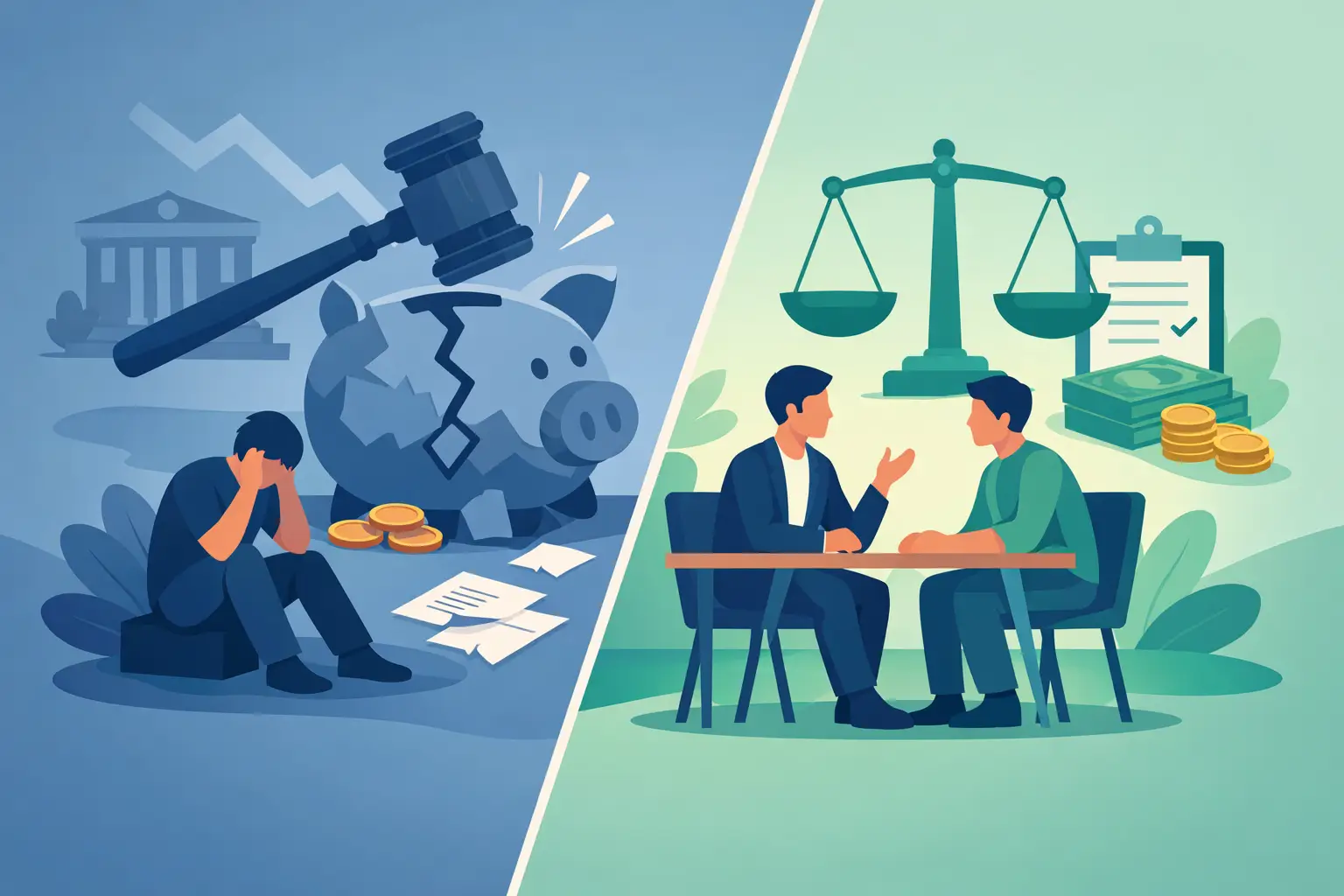
When your phone will not stop ringing, your paycheck is being threatened, or the mortgage is behind, the question is not academic. It is immediate. For many people in Memphis, the choice comes down to bankruptcy or debt settlement, and the wrong move can cost you time, money, and options you may not get back.
A lot of debt settlement advertising makes the process sound simple. Pay less than you owe. Avoid court. Move on. Sometimes that pitch lands because people are scared of bankruptcy or embarrassed to ask about it. But if you are dealing with wage garnishment, foreclosure, repossession, lawsuits, payday loans, medical bills, or credit card debt that has gotten out of hand, you need to know what each option actually does – and what it does not do.
Bankruptcy or debt settlement: what is the real difference?
Debt settlement is a negotiation strategy. Bankruptcy is a legal remedy.
That difference matters more than most people realize. With debt settlement, a company or attorney tries to get creditors to accept less than the full balance. Some creditors will negotiate. Some will not. During that process, there is usually no automatic legal protection stopping collection calls, lawsuits, garnishments, or foreclosure activity.
Bankruptcy is different because the law gives you immediate protections. When a bankruptcy case is filed, the automatic stay can stop collection actions right away in many situations. That can mean stopping a wage garnishment, stopping a foreclosure sale, stopping repossession efforts, and stopping creditor harassment. If your problem is urgent, that difference is not small. It is often the whole case.
When debt settlement sounds attractive
Debt settlement appeals to people for understandable reasons. It feels less serious. It sounds private. It can appear to be a middle path between struggling and filing bankruptcy.
In limited situations, settlement may help. If you have one or two debts, steady income, some ability to offer lump-sum payments, and no immediate legal threats, a negotiated reduction might make sense. The key issue is whether you can actually fund the settlement. Creditors generally do not reduce balances out of goodwill. They settle because they believe that is the best realistic recovery.
The problem is that many people considering settlement do not have extra cash sitting around. They are already behind on everything. If you are using one debt to settle another, draining retirement savings, borrowing from family, or waiting while accounts grow with interest and fees, settlement can turn into a long and expensive holding pattern.
It can also create tax issues in some cases. Forgiven debt may be treated as taxable income unless an exception applies. That does not automatically make settlement a bad idea, but it is one more factor people often learn about too late.
When bankruptcy is usually the stronger option
If your debt problem is broad, aggressive, or tied to immediate deadlines, bankruptcy is often the more effective tool.
Chapter 7 can wipe out many unsecured debts, including credit card balances, medical bills, signature loans, and certain old judgments. For someone who simply cannot pay, that kind of clean break matters. Instead of trying to negotiate account by account, Chapter 7 can eliminate qualifying debt through one legal process.
Chapter 13 works differently. It is often the better fit when you are behind on a mortgage, trying to save a car, catching up on secured debt, or dealing with income that is too high for Chapter 7. Chapter 13 can let you repay debt under court protection over time while stopping immediate collection pressure. If your house is on the line, that structure can be exactly what buys you the time you need.
This is where local legal guidance matters. Bankruptcy is not just a general concept. It is a federal legal process handled in a real court, with real trustees, deadlines, documents, and local practice issues. A lawyer who regularly works in the Western District of Tennessee Bankruptcy Court knows how these cases move and what practical solutions are available when pressure is building fast.
Which option stops collection pressure faster?
For most people in crisis, bankruptcy wins that comparison.
Debt settlement does not automatically stop lawsuits. It does not automatically stop garnishments. It does not automatically stop foreclosure. A creditor can still decide to sue while negotiations are pending, and many do. If your wages are already being taken or a sale date is approaching, waiting for voluntary cooperation from creditors can be a costly gamble.
Bankruptcy gives you the protection of the automatic stay. That is one of the most powerful reasons people file. It changes the conversation from hoping creditors will slow down to requiring them to stop in many circumstances. If your problem is urgent, speed matters.
What about your credit?
People often ask this question as if debt settlement protects credit and bankruptcy destroys it. Real life is not that neat.
If you are already missing payments, maxed out, facing charge-offs, or being sued, your credit is likely already suffering. Debt settlement can also seriously damage credit because accounts often go delinquent before settlements happen, and settled debts may still be reported negatively. Bankruptcy is a major credit event, but it can also be the point where rebuilding begins because the underlying debt burden is actually addressed.
The better question is not which option sounds better on a future credit report. The better question is which option solves the problem in a way you can sustain. A damaged credit score with no path out is worse than a legal reset that lets you recover.
Asset protection and peace of mind
Another major difference in the bankruptcy or debt settlement decision is protection.
Settlement does not create broad legal protection for your home, car, bank account, or wages. It is still a negotiation from a position of vulnerability. Bankruptcy, on the other hand, is designed to deal with exactly those pressures. Depending on the chapter and your financial situation, it may help protect your property while resolving debt in an organized way.
People are often surprised to learn that filing bankruptcy does not mean losing everything. That is one of the biggest myths out there. In many consumer cases, people keep their everyday property. If you have been avoiding a consultation because you assume bankruptcy means starting from zero, you may be worrying about the wrong outcome.
Why debt settlement fails so often
Debt settlement can fail for a simple reason: it asks financially distressed people to stay financially stable long enough to negotiate from weakness.
If you fall behind on the settlement plan, creditors may keep pursuing you. If one creditor settles and another refuses, the overall problem may still remain. If a lawsuit hits before enough money is saved, the pressure escalates. And if the debt load is too large, even discounted balances may still be more than you can realistically pay.
This is why a serious debt review should look at your full picture, not just one balance at a time. Are you behind on the mortgage? Is your car at risk? Are wages being garnished? Are payday or title loans trapping you in repeat payments? Once you look at the whole situation, bankruptcy often makes more sense because it deals with the entire financial emergency, not just selected accounts.
How to decide between bankruptcy or debt settlement
Start with urgency, not pride.
If you have enough income to fund realistic settlements, no immediate court action, and only a limited amount of debt, settlement may be worth discussing. But if creditors are suing, garnishing wages, threatening foreclosure, or if your debt is spread across multiple accounts with no realistic payoff plan, bankruptcy is usually the more dependable solution.
The right answer also depends on what outcome you need most. If the goal is to stop a foreclosure sale, Chapter 13 may be the better tool. If the goal is to wipe out unsecured debt quickly, Chapter 7 may be the stronger answer. If the goal is simply to avoid the word bankruptcy, that is not really a strategy. It is a feeling, and feelings alone do not stop creditors.
At Arthur Ray Law Offices, this is where experience matters. A real case review can tell you whether bankruptcy is appropriate, which chapter fits, what can be protected, and how quickly relief may begin. Just as important, it can tell you when settlement is unlikely to work before you waste months and money chasing it.
If you are torn between bankruptcy and debt settlement, do not judge the option by how it sounds. Judge it by what it actually does for your paycheck, your home, your car, and your peace of mind. The best debt solution is the one that gives you real relief soon enough to matter.
Sincerely yours,


Arthur Ray
Arthur Ray Law Offices
We are a debt relief agency. Our Bankruptcy Lawyers in Memphis, TN help people file for bankruptcy under the bankruptcy code.
*For those who qualify under federal law.