
How to Stop Debt Collectors Legally
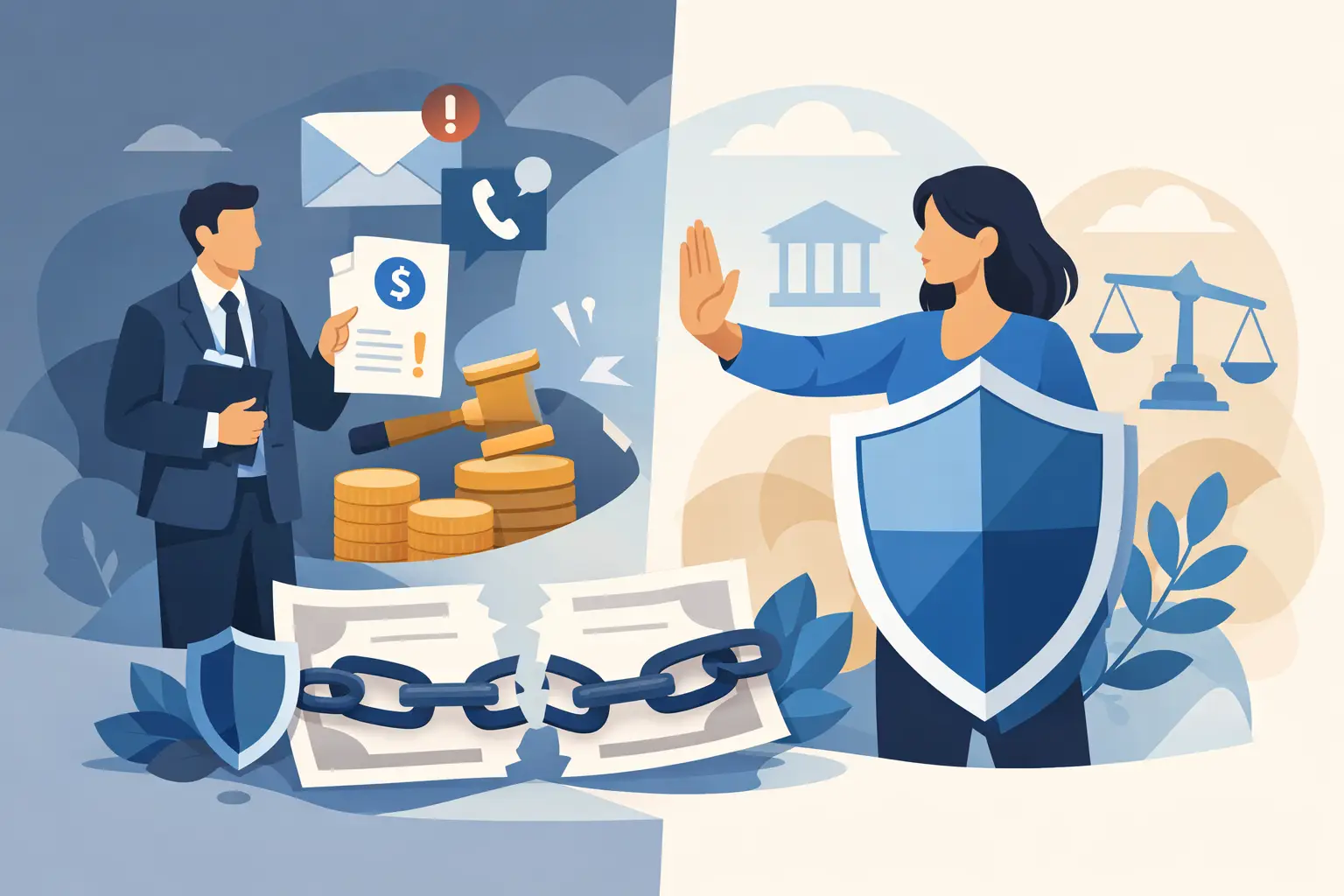
The phone rings before breakfast. Then again at work. Then a voicemail lands saying legal action may be next. If you are searching for how to stop debt collectors, you probably do not need theory. You need the pressure to stop, and you need to know what actually works under Tennessee and federal law.
Here is the straight answer: debt collectors do not get to do whatever they want. You have rights. More importantly, if the debt is too large to realistically fix with small monthly payments, there are legal tools that can stop collection calls, wage garnishments, lawsuits, repossessions, and foreclosure pressure fast. The right solution depends on how far the collectors have gone and what kind of debt you are dealing with.
How to stop debt collectors when they keep calling
If a collection agency is calling over and over, start by separating annoyance from legal leverage. You can tell a debt collector to stop contacting you. Under federal law, you can send a written notice telling a debt collector to cease communication. After that, they generally can only contact you to confirm they will stop or to tell you they plan to take a specific action, such as filing suit.
That can reduce the daily stress, but it does not erase the debt. It also does not stop an original creditor in every situation the same way it affects a third-party collector. That is where many people get frustrated. They stop the calls for a while, then a lawsuit, garnishment, or another collector shows up later.
So yes, a cease contact letter can help. But if the debt is valid and you cannot pay it, it is often a temporary fix rather than a full solution.
What debt collectors cannot do
Collectors use pressure because pressure works. People pay out of fear. But there are limits.
They generally cannot harass you, threaten violence, use obscene language, call repeatedly to annoy you, lie about who they are, pretend to be law enforcement, or falsely claim you will be arrested for unpaid consumer debt. They also cannot misrepresent the amount you owe or threaten legal action they do not actually intend to take.
That said, some collectors stay just inside the line. They may sound aggressive without saying anything clearly illegal. They may imply serious consequences without making a direct false statement. That is why people often feel bullied even when the collector is being careful enough to avoid obvious violations.
Keep records anyway. Save voicemails. Screenshot texts. Write down dates, times, company names, and what was said. If a collector crosses the line, those details matter.
Asking for proof before you pay
One of the smartest early moves is to make sure the debt is really yours and the amount is accurate. Collection accounts are sold, transferred, and reported with mistakes all the time. If you were recently contacted, you may have the right to request validation of the debt.
This is especially important if the debt is old, the amount seems inflated, or the collector cannot clearly explain where it came from. Sometimes the balance includes fees or interest that need a closer look. Sometimes the wrong person is being pursued. Sometimes the debt is too old to sue on, even though collectors still ask for payment.
But again, this is a defensive move. It can expose bad paperwork or errors. It does not solve a real debt problem if the account is legitimate and several creditors are closing in at once.
When how to stop debt collectors really means stopping lawsuits and garnishments
A lot of people say they want the calls to stop, but the bigger threat is what comes next. If a creditor sues you and wins a judgment, you may be facing wage garnishment or a bank levy. At that point, the issue is no longer just annoying phone calls. It is your paycheck, your rent money, and your ability to keep up with daily life.
If you have been served with a lawsuit, do not ignore it. If your wages are already being garnished, do not assume there is nothing you can do. There may still be legal options, and timing matters.
This is where bankruptcy becomes more than a last resort. It becomes a shield. Filing a bankruptcy case triggers the automatic stay, which is a powerful federal court order that stops most collection activity right away. That can stop collection calls, lawsuits, garnishments, bank levies, repossessions, and foreclosure actions in many situations.
For someone overwhelmed by multiple debts, this is often the clearest answer to how to stop debt collectors for real instead of one collector at a time.
Bankruptcy can stop more than calls
People often wait too long to consider bankruptcy because they think it is only for people who have lost everything. That is not how it works. Bankruptcy is a legal tool designed to give honest people relief when debt has become unmanageable.
Chapter 7 can wipe out many unsecured debts, including credit card bills, medical debt, personal loans, and old collection accounts. If your income and overall circumstances qualify, that may mean the debts are discharged and the collection pressure ends because the debts themselves are eliminated.
Chapter 13 works differently. It is often used when someone needs time and court protection to catch up on mortgage arrears, stop foreclosure, deal with car issues, or manage debts through a repayment plan. It can also stop garnishments and give you breathing room when your income is steady but the debt load is too high.
The trade-off is simple. Bankruptcy is powerful, but it is a formal legal process. It requires full financial disclosure, court filings, and choosing the right chapter for your situation. It is not something to guess your way through when your home, wages, or vehicle are on the line.
When a payment plan may work and when it usually does not
Sometimes people can settle a debt or work out payments directly. If you have one collection account, enough income to deal with it, and no immediate lawsuit threat, a negotiated resolution might make sense. In some cases, a lump-sum settlement can save money.
But if you are juggling credit cards, medical bills, payday loans, title loans, and a possible foreclosure or repossession, separate payment deals usually collapse. One collector gets paid, another sues, and the overall pressure gets worse. That is the problem with piecemeal solutions. They can work for isolated debt. They usually do not work for a full financial crisis.
That is why the right answer depends on the size of the problem. If the issue is one account, negotiation may help. If the issue is systemic debt, legal protection is often the better path.
What to do right now if collectors are pressuring you
Start by slowing the panic and getting organized. Gather every collection letter, court paper, billing statement, and garnishment notice you have. Make a list of who is calling, how much they claim you owe, and whether any creditor has already sued you or threatened foreclosure or repossession.
Next, stop making decisions based only on fear. Do not promise payments you cannot keep just to get through one phone call. Do not drain retirement funds or skip your mortgage or car payment to satisfy an unsecured collector unless you have gotten legal advice about the bigger picture.
Then look at your total debt, not just the loudest collector. If you are behind in several places at once, the question is not just how to stop debt collectors. The real question is how to stop the entire debt spiral before it costs you your paycheck, your car, or your home.
For many people in Memphis and Shelby County, that means talking with a bankruptcy lawyer who can tell you exactly what protection is available and how quickly it can start. Arthur Ray Law Offices focuses on practical debt relief, and that kind of local court experience can matter when the situation is urgent.
Common mistakes that make collection problems worse
The biggest mistake is delay. People wait because they are embarrassed, overwhelmed, or hoping the problem will settle down on its own. Usually it does not. Collection accounts grow. Lawsuits get filed. Garnishments begin. Foreclosure deadlines get closer.
Another mistake is treating every debt the same. Medical bills, credit cards, payday loans, car notes, and mortgages create different risks. The best response to one may be the wrong response to another.
The last major mistake is assuming bankruptcy means failure. For many working people, it is the exact opposite. It is a deliberate legal step to stop the bleeding, protect income, and rebuild from a position of stability instead of constant panic.
If debt collectors are calling, that is your warning sign. You do not have to keep absorbing the pressure and hoping it passes. The right legal strategy can change the situation quickly, and sometimes the fastest way to get peace is to stop trying to manage an impossible debt load alone.
Written and legally reviewed by:


We are a debt relief agency. Our Bankruptcy Lawyers in Memphis, TN help people file for bankruptcy under the bankruptcy code.
*For those who qualify under federal law.