
Bankruptcy vs Debt Management Plan: Choose Relief
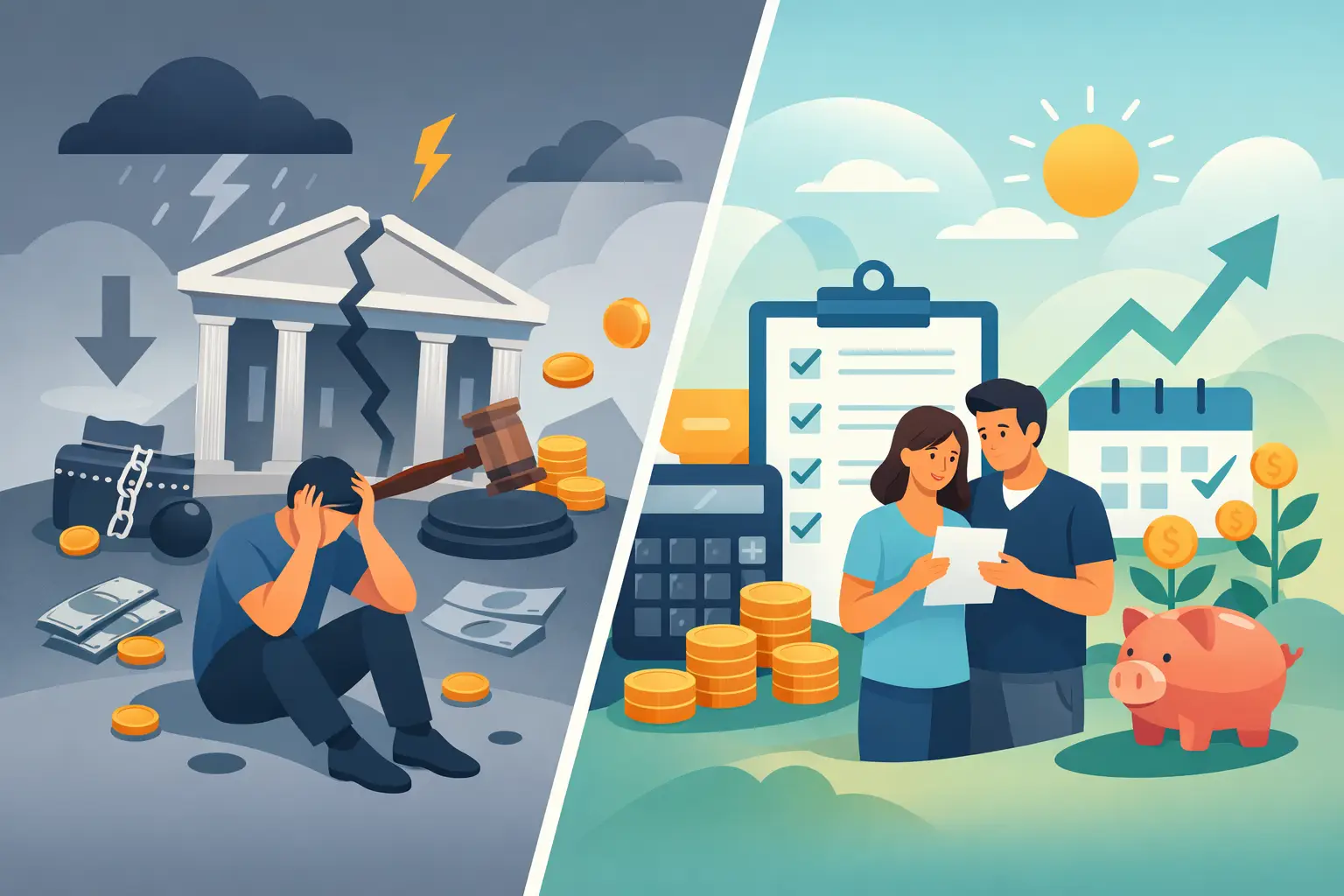
A wage garnishment notice, a foreclosure date, or a repossession threat changes the question fast. You do not need a vague promise to “get your finances under control.” You need to know what will stop the pressure and what will actually reduce the debt. In the choice between bankruptcy vs debt management plan, the right answer depends on the type of debt you have, how far behind you are, and whether creditors are already taking action against you.
A debt management plan can help some people who have steady income and mainly credit card debt. Bankruptcy can provide much stronger legal protection when debt has become unpayable, collection activity is escalating, or you need to protect a home, paycheck, vehicle, or bank account. Neither option should be chosen out of shame. The goal is to use the tool that gives your family a realistic path forward.
Bankruptcy vs Debt Management Plan: The Basic Difference
A debt management plan, often called a DMP, is usually offered through a nonprofit credit counseling agency. The agency may negotiate lower interest rates or reduced fees with participating credit card companies. You make one monthly payment to the agency, which distributes money to your creditors.
A DMP is not a court order, and it does not erase your debt. In most cases, you repay the full principal balance over three to five years. Your creditors must agree to participate, and the plan generally focuses on unsecured debt such as credit cards, personal loans, and some collection accounts. Mortgage arrears, car loans, title loans, most tax debts, and many urgent legal problems are usually outside its reach.
Bankruptcy is a federal legal process. When a bankruptcy case is filed, the automatic stay generally goes into effect immediately. This court protection can stop most collection calls, lawsuits, wage garnishments, repossessions, and foreclosure activity while the case moves forward. A Chapter 7 case may discharge qualifying unsecured debts. A Chapter 13 case creates a court-approved repayment plan that can give you time to catch up on certain secured debts, including past-due mortgage payments.
That difference matters when creditors are no longer simply sending letters. A voluntary repayment plan may be useful before a crisis. A bankruptcy filing can be the stronger response when the crisis is already here.
When a Debt Management Plan May Make Sense
A DMP may be worth considering if you have reliable income, can afford to repay your credit card balances in full, and are not facing foreclosure, garnishment, lawsuits, or repossession. For example, someone with $15,000 in credit card balances, good employment stability, and enough room in the monthly budget for a fixed payment may benefit from lower interest and a structured payoff date.
The key question is whether the monthly payment is truly sustainable. A plan that looks manageable only if nothing goes wrong is not a stable solution. Memphis families already dealing with high rent, medical costs, child care, car repairs, or irregular work hours often find that a three-to-five-year repayment commitment leaves no room for real life.
You should also understand the limits. Most DMPs require you to close enrolled credit card accounts. If a participating creditor refuses the plan or removes concessions after missed payments, the account can return to regular collection status. The agency cannot force a lender to stop a lawsuit, cancel a garnishment, or delay a foreclosure sale.
A DMP is also different from debt settlement. Debt settlement companies may ask you to stop paying creditors while they attempt to negotiate reduced balances. That approach can lead to late fees, lawsuits, damaged credit, and taxable forgiven debt. Do not assume all “debt relief” programs offer the same protection.
When Bankruptcy Is Usually the More Practical Answer
Bankruptcy deserves serious consideration when you cannot realistically repay what you owe, even with reduced interest. It is often the better option when unsecured debt is consuming your paycheck and there is no credible way to pay it off within a few years.
Chapter 7 is commonly used to eliminate qualifying credit card debt, medical bills, personal loans, payday loans, and deficiency balances after repossession. For eligible filers, it can provide a relatively fast fresh start. Many people are surprised to learn that they may be able to keep necessary exempt property while discharging debt that has been following them for years.
Chapter 13 may be the better fit when you are behind on your mortgage, need time to catch up on a vehicle, have income that exceeds Chapter 7 limits, or need a structured way to address debts that cannot simply be discharged. A Chapter 13 plan generally lasts three to five years, but it is fundamentally different from a DMP because it is supervised by the bankruptcy court and backed by federal law.
Bankruptcy can be especially powerful if you are dealing with one or more of these problems:
- A creditor is garnishing your wages or has frozen money in your account.
- Your home is scheduled for foreclosure or you are behind on mortgage payments.
- Your vehicle has been repossessed or the lender is threatening repossession.
- Payday loans, title loans, medical bills, or credit cards have become impossible to manage.
- Collection lawsuits or judgments are multiplying faster than you can respond.
Filing does not make every debt disappear. Child support, alimony, many student loans, certain recent taxes, and debts involving fraud may receive different treatment. That is why a careful case review matters. The right bankruptcy chapter depends on your income, assets, household size, debt types, and immediate legal threats.
Do Not Choose Based on Credit Score Alone
Many people delay bankruptcy because they fear the effect on their credit. That concern is understandable, but it should be measured against your current reality. Late payments, charge-offs, collections, judgments, high credit utilization, and missed car or mortgage payments may already be seriously damaging your score.
A debt management plan may initially affect credit because enrolled accounts are often closed. Bankruptcy appears on a credit report for a period of time, but many filers begin rebuilding sooner than expected because the debt-to-income pressure is gone. They can focus on keeping current accounts current, building savings, and avoiding new missed payments.
The better question is not, “Which option has no credit consequences?” Neither does. Ask instead, “Which option puts me in a position to pay my bills on time next year?” A short-term credit concern should not force you to remain trapped in debt that is taking your wages, threatening your home, or keeping you from paying for necessities.
Compare the Monthly Payment Honestly
Before committing to any repayment program, put the numbers on paper. Add your housing, utilities, food, transportation, insurance, child care, medical expenses, and minimum payments. Then account for the expenses that do not arrive every month, such as car repairs, school costs, prescriptions, and home maintenance.
If the payment proposed by a debt management agency leaves you with no margin, the plan may fail. Missing payments can undo negotiated concessions and restart collection pressure. A bankruptcy case may provide more room to recover because Chapter 7 can eliminate qualifying unsecured debt rather than requiring full repayment, while Chapter 13 can organize payments around a court-approved plan.
For homeowners, the comparison is even more urgent. A DMP generally cannot cure mortgage arrears or stop a foreclosure sale. Chapter 13 may allow a homeowner to catch up on past-due payments over time while maintaining ongoing mortgage payments. For a driver whose job depends on a vehicle, bankruptcy may also provide options that a general debt repayment plan cannot offer.
Get Advice Before the Deadline Passes
Do not wait until the sheriff is serving papers, the car is gone, or the foreclosure sale is tomorrow. The earlier you understand your choices, the more options may be available. Yet even when the pressure is immediate, there may still be a legal path to stop it.
At Arthur Ray Law Offices, the focus is not on pushing every person into the same answer. It is on reviewing the debt, the income, the property, and the deadlines so you can see what each option would actually do. With more than 40 years of bankruptcy experience in Memphis and the Western District of Tennessee, Arthur Ray understands that debt relief must work in the real world, not just on a worksheet.
A debt management plan can be a responsible choice for someone who can repay their debt. Bankruptcy can be a life-changing legal remedy for someone who cannot. If creditors are taking more than you can afford to lose, a clear legal evaluation can replace fear with a workable next step.
Written and legally reviewed by:


We are a debt relief agency. Our Bankruptcy Lawyers in Memphis, TN help people file for bankruptcy under the bankruptcy code.
*For those who qualify under federal law.