
Chapter 13 vs Loan Modification
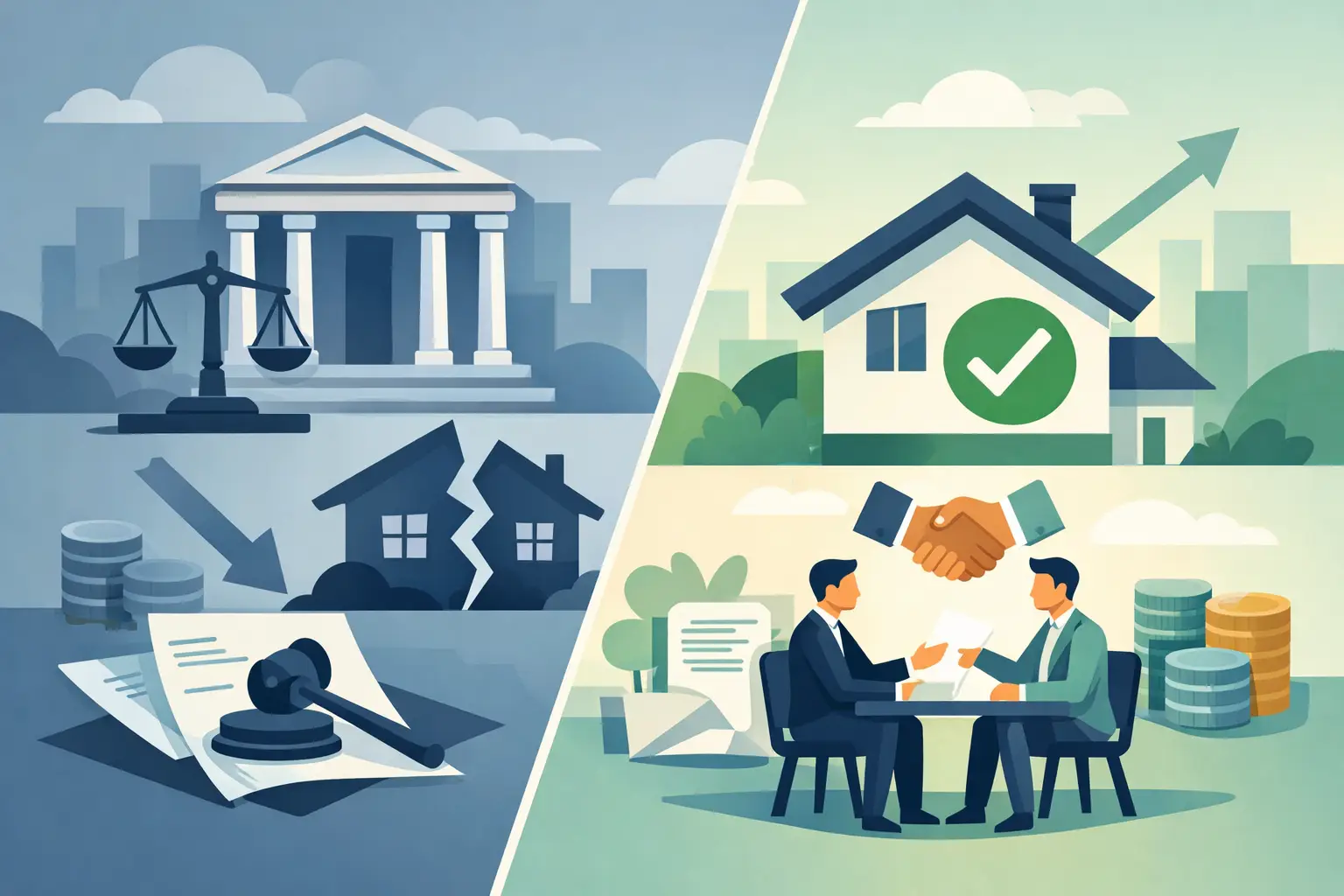
When your mortgage is behind and the foreclosure clock is ticking, the choice between chapter 13 vs loan modification is not academic. It affects whether you keep your home, how fast the sale is stopped, what happens to your other debts, and whether the payment you end up with is actually sustainable.
A lot of homeowners come in thinking these are interchangeable. They are not. Both can help in the right situation, but they work in very different ways. One is a bankruptcy case filed in federal court. The other is a request to your mortgage company to change the loan terms. If you are trying to protect your house in Memphis or Shelby County, you need to understand that difference before you lose more time.
Chapter 13 vs loan modification: the basic difference
Chapter 13 is a court-supervised repayment plan. Once the case is filed, the automatic stay goes into effect and stops foreclosure immediately in most situations. It can also stop wage garnishments, repossessions, lawsuits, and other collection pressure at the same time. You pay through a plan, usually over three to five years, and mortgage arrears can be spread out over that period while you continue making your regular house payment.
A loan modification is not a bankruptcy case. It is a workout option offered by the mortgage lender or servicer. The lender may agree to roll missed payments into the balance, extend the loan term, reduce the interest rate, or adjust the monthly payment. But until the lender approves it in writing, you do not have a guaranteed solution. And applying for a modification does not automatically stop a foreclosure sale.
That is the first major practical difference. Chapter 13 gives you legal protection right away. A loan modification is a negotiation.
When Chapter 13 is usually stronger
If a foreclosure sale is close, Chapter 13 is often the more dependable tool because it can stop the sale as soon as the case is filed. That matters when you do not have weeks or months to wait for a servicer to review paperwork, ask for updated pay stubs, or deny the application for reasons that make no real-world sense.
Chapter 13 can also help when the mortgage is not the only problem. Many homeowners are also dealing with credit card debt, medical bills, title loans, old repossession balances, personal loans, and wage garnishments. A loan modification only addresses the mortgage. It does nothing by itself to wipe out unsecured debt or stop other collectors. Chapter 13 can deal with the whole financial picture.
That broader relief is often what makes the home affordable again. Lowering one payment helps, but if your paycheck is still being hit by garnishments and every other creditor is calling, the pressure does not really stop. Bankruptcy can create room in your budget by addressing those other debts too.
There is also a structure advantage. In Chapter 13, the amount you are behind on the mortgage can be paid over time through the plan instead of in one lump sum. For many families, that is the only realistic way to catch up.
When a loan modification may make sense
A loan modification may be worth pursuing if your main problem is the mortgage payment itself and your other debts are manageable. If you had a temporary hardship, have recovered income, and can afford a modified payment, a lender workout could solve the issue without filing bankruptcy.
This can be attractive to homeowners who are only a few months behind, are not facing aggressive collection activity elsewhere, and want to avoid a court case if possible. In some cases, a modification can lower the interest rate or stretch the loan long enough to make the monthly payment more affordable.
But there is a catch. Mortgage servicers do not approve every application, and the process can drag on. People are often asked for the same documents more than once. Trial payments may be offered and then not converted into permanent terms right away. Sometimes the foreclosure keeps moving while the review is pending.
That uncertainty is why timing matters so much.
The foreclosure question is where the choice gets real
If your priority is stopping a scheduled foreclosure sale, chapter 13 vs loan modification is usually not a close call. Chapter 13 is typically the stronger emergency option because the protection comes from the bankruptcy court, not the lender’s goodwill.
A pending loan modification application may delay foreclosure in some situations, but you should never assume it will. Servicers make mistakes. Files get transferred. Notices still go out. Homeowners are told one thing on the phone and receive another in writing.
By contrast, Chapter 13 creates immediate legal consequences. Creditors must stop collection activity once the case is filed, and the mortgage arrears can be dealt with through the plan. For someone who needs certainty now, that difference is huge.
Payment affordability matters more than labels
Some people assume a loan modification is automatically cheaper than Chapter 13. That is not always true. A modification may lower the monthly mortgage payment, but it can also add missed payments, fees, and escrow shortages back into the loan. Depending on the terms, the result may still be hard to manage.
Chapter 13 has a plan payment, and that can sound intimidating at first. But the full analysis is more practical than that. If Chapter 13 stops garnishments, restructures arrears, and wipes out dischargeable unsecured debts, your total monthly financial burden may end up more manageable than trying to keep up with all creditors outside bankruptcy.
This is why no honest lawyer should give a one-size-fits-all answer. The right option depends on your income, your mortgage status, your other debts, and how urgent the foreclosure threat really is.
Chapter 13 can do what a modification cannot
A loan modification is limited to one loan relationship. Chapter 13 can solve several problems at once.
It can stop foreclosure, stop wage garnishments, stop repossession efforts, and deal with unsecured debt in the same case. If you are behind on a car, buried in medical debt, or trapped by payday loans while trying to save your home, that matters. Mortgage relief alone may not be enough.
In many cases, bankruptcy also gives people something they have not had in a long time – a clear timeline. Instead of hoping a servicer approves new terms, you are working within a legal framework with deadlines, filings, and court protection.
That does not mean Chapter 13 is effortless. You need enough regular income to support a plan, and you need to stay current on required payments. But for many families, that structure is exactly what makes recovery possible.
Can you use both?
Yes, sometimes. A homeowner may file Chapter 13 to stop foreclosure and then seek a loan modification during the case. That can be a smart strategy in the right circumstances. The bankruptcy provides immediate protection while the modification is reviewed.
If the modification is approved and the terms are workable, the Chapter 13 plan may be adjusted accordingly. This approach can give you the best of both worlds – court protection now and a possible long-term mortgage solution later.
This is another reason you should not treat chapter 13 vs loan modification as a simple either-or debate. Sometimes the best answer is using Chapter 13 as the safety net while exploring modification from a position of protection rather than panic.
What Memphis homeowners should focus on first
Do not start with pride, fear, or what you heard from a friend. Start with the facts. How much are you behind? Is there a sale date? Are you also being garnished or sued? Is your income stable? Can you afford your regular mortgage payment if the arrears are spread out? Would eliminating other debt free up enough money to save the home?
Those questions lead to the right answer faster than general internet advice. At Arthur Ray Law Offices, that is exactly how these cases are evaluated – by looking at the full financial emergency, not just one debt in isolation.
If you are waiting for a loan modification decision while foreclosure gets closer, you are taking a serious risk. If you can truly afford the house and just need a formal way to catch up, Chapter 13 may be the tool that protects you. If your hardship was temporary and the lender is offering terms you can actually live with, a modification may work. And if both options are on the table, the smartest move may be using them together strategically.
The key is not choosing the option that sounds simpler. It is choosing the one that gives you the strongest chance to keep your home and breathe again.
Written and legally reviewed by:


We are a debt relief agency. Our Bankruptcy Lawyers in Memphis, TN help people file for bankruptcy under the bankruptcy code.
*For those who qualify under federal law.