
Chapter 7 vs Debt Settlement
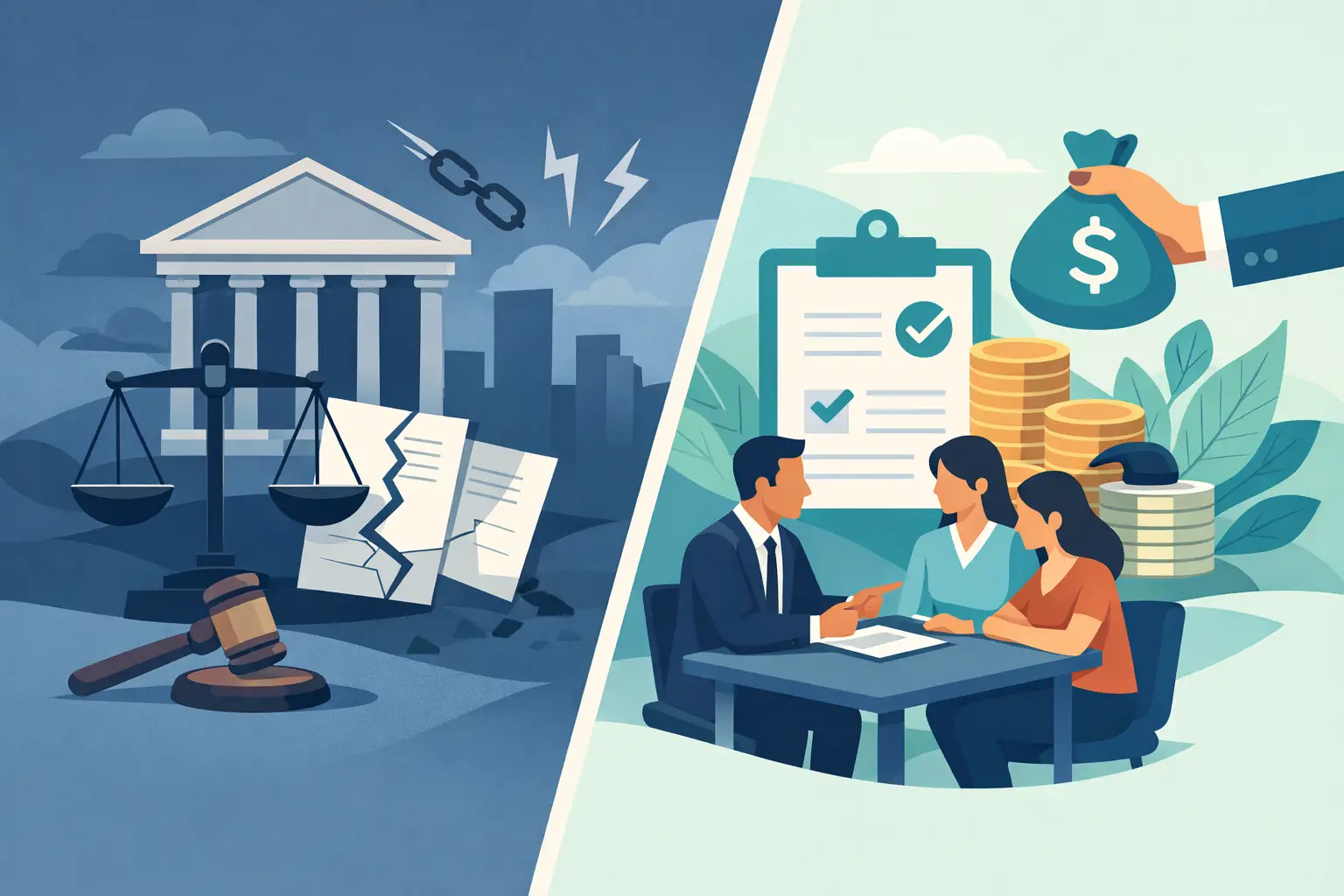
When creditors are calling, your paycheck is being squeezed, or foreclosure is getting too close for comfort, the question is not academic. Chapter 7 vs debt settlement is a decision that can affect how fast you get relief, how much you pay, and whether the pressure actually stops.
A lot of people come in thinking debt settlement sounds safer because it does not involve bankruptcy court. That reaction is understandable. But the real issue is not which option sounds better in a commercial or on a debt relief website. The real issue is which one actually solves your problem under your circumstances.
Chapter 7 vs debt settlement: the basic difference
Chapter 7 bankruptcy is a legal process that can wipe out many unsecured debts, including credit cards, medical bills, payday loans, signature loans, and many old personal debts. Once a case is filed, the automatic stay goes into effect and creditors generally have to stop collection activity. That can mean an immediate stop to lawsuits, garnishments, collection calls, and other pressure.
Debt settlement is different. It is usually a negotiation process, not a court process. A settlement company or sometimes the consumer tries to bargain with creditors for less than the full balance. In theory, a creditor accepts a reduced amount and treats the account as resolved. In practice, that process can take time, creditors do not have to agree, and collection activity may continue while negotiations are happening.
That difference matters more than most people realize. If you need immediate legal protection, Chapter 7 often provides something debt settlement simply cannot.
When Chapter 7 is usually stronger
If most of your debt is unsecured and you truly cannot pay it, Chapter 7 is often the cleaner and more dependable option. It is designed for people who need a fresh start, not a long workout plan with creditors who may or may not cooperate.
For many Memphis-area families, the biggest benefit is speed. Once the case is filed, the legal protection starts right away. If you are being garnished, sued, or harassed by collectors, that timing can make a huge difference. Debt settlement does not force creditors to back off. Chapter 7 usually does.
Chapter 7 can also be more cost-effective than people expect. With debt settlement, you typically need money available to make settlement offers. If you are already behind on rent, utilities, car payments, or groceries, coming up with lump sums for multiple creditors may not be realistic. Some settlement programs require monthly deposits for months before meaningful offers are made. Meanwhile, balances can grow with interest and fees.
By contrast, Chapter 7 deals with the debt through the court system and can discharge qualifying unsecured debt without requiring you to settle each account one by one. That is often a better fit for someone who is already tapped out.
When debt settlement may make sense
Debt settlement is not always a bad idea. There are situations where it can be useful.
If you have only one or two major unsecured accounts, no immediate lawsuit threat, and access to cash to offer a settlement, negotiation may work. It can also make sense for someone who does not qualify for Chapter 7 or who has a specific reason to avoid filing bankruptcy.
But this is where honesty matters. Debt settlement tends to work better for people who can actually fund settlements. If your debt problem is broad, your income is tight, and creditors are already aggressive, settlement can turn into a long, stressful process with uncertain results.
It is also common for people to underestimate how uneven creditor behavior can be. One creditor may settle. Another may refuse. Another may sue first. That patchwork approach can leave you with ongoing risk instead of real closure.
Cost is not just about fees
People often compare Chapter 7 and debt settlement by asking which one is cheaper. That is the right question, but you have to look at the whole picture.
With debt settlement, there may be program fees, missed-payment consequences, interest accrual, late fees, and the need to save enough money to make offers. There can also be tax consequences when forgiven debt is treated as income in some situations. Not every person will face that issue, but it is part of the calculation.
With Chapter 7, you are paying for a legal process with court supervision and a defined result. The benefit is that qualifying unsecured debts are discharged rather than negotiated account by account. For many people, that means less uncertainty and a shorter path to relief.
A cheaper-looking option can become expensive if it fails to stop the damage quickly. If a creditor garnishes your wages, freezes your bank account after a judgment, or pushes a lawsuit forward while you are trying to negotiate, the financial hit can be serious.
Credit impact: neither option is magic
Some people are told debt settlement is better for credit than bankruptcy. That is too simplistic.
The truth is that both options can hurt your credit, especially if you are already behind. Debt settlement usually involves missed payments and accounts reported as settled for less than full balance. Chapter 7 appears as a bankruptcy filing. Neither one is a credit-repair strategy.
What matters more is what happens after the debt problem is resolved. Many people are already seeing major credit damage from charge-offs, collections, judgments, and high balances. If Chapter 7 eliminates the debt burden and stops the spiral, it may put you in a better position to rebuild than months or years of unsuccessful settlement attempts.
Credit should be considered, but it should not be the only factor. If your current debt is making it impossible to keep a roof over your head or your wages are being taken, immediate relief may matter more than trying to protect a score that is already under pressure.
Lawsuits, garnishments, and foreclosure pressure
This is where chapter 7 vs debt settlement becomes very practical.
Debt settlement does not automatically stop a creditor from filing suit. It does not create an automatic stay. It does not force a garnishment to stop. If a creditor chooses to sue while negotiations are pending, you can still end up in court.
Chapter 7 is often much stronger when there is active collection pressure. The filing itself creates legal protection. That can stop many collection actions fast, which is exactly what a lot of struggling families need.
Now, Chapter 7 is not the right answer for every foreclosure situation. If your main goal is keeping a house and catching up over time, Chapter 13 may be the better tool. But if the comparison is Chapter 7 against debt settlement, Chapter 7 generally offers much stronger legal protection against unsecured creditor action.
Why people get pulled toward debt settlement
The marketing is part of it. Debt settlement is often presented as a way to avoid bankruptcy while still paying less than you owe. That sounds appealing when you are scared and embarrassed about debt.
But avoiding the word bankruptcy is not the same as solving the problem. A lot of people wait too long because they are trying to force a settlement strategy that does not match their finances. By the time they ask about bankruptcy, they have lost thousands to garnishments, cashed out retirement funds, or emptied savings trying to keep impossible debt alive.
There is nothing wrong with wanting another option first. The mistake is staying in a failing option because it sounds less serious.
What usually decides the better choice
The right answer usually comes down to four things: the type of debt, the amount of debt, how urgent the creditor pressure is, and whether you have money available to settle.
If you have widespread unsecured debt, little savings, and active collections, Chapter 7 is often the more reliable form of relief. If you have limited debt, some cash on hand, and no immediate legal threats, settlement may be worth discussing.
That is why a real case review matters. You need someone to look at your full picture, not just one balance on one statement. Income, assets, lawsuits, garnishments, foreclosure risk, and the kind of debt you owe all matter.
At Arthur Ray Law Offices, this is where experience makes a difference. A local bankruptcy attorney who has spent decades helping people in the Western District of Tennessee can usually spot very quickly whether settlement is realistic or whether Chapter 7 would get you relief faster and with less risk.
If you are stuck between Chapter 7 and debt settlement, do not choose based on fear or advertising. Choose the option that gives you the clearest path to stopping the damage and getting your life back under control.
Written and legally reviewed by:


We are a debt relief agency. Our Bankruptcy Lawyers in Memphis, TN help people file for bankruptcy under the bankruptcy code.
*For those who qualify under federal law.